Linear Actuator Duty Cycle Explained: What a 10% Rating Really Means
What a 10% duty cycle means for an electric linear actuator, how to calculate it for your machine, and what happens when the rating is exceeded.
Duty cycle is the most misunderstood number on an actuator datasheet. A 10% rating does not mean the actuator is weak. It is a limit on how long the motor can run before it must rest and cool down. Getting it wrong is the most common cause of early failure.
- 10% = about 1 min running, 9 min rest
- Overheating, not wear, ends most short lives
- Continuous motion needs a different design
What duty cycle means
Duty cycle is the percentage of time an actuator can run within a given period. Purlin linear actuators are rated at 10%. In practice that means about 1 minute of running followed by about 9 minutes of rest, or 2 minutes running in any 20-minute window.
The limit exists because of heat. The DC motor, gearbox and lead screw all turn electrical energy into some heat as well as motion. A compact actuator has a small body to get rid of that heat, so it needs rest time to cool.
How to calculate the duty cycle of your application
Use this simple formula:
Duty cycle (%) = running time ÷ (running time + rest time) × 100
Examples:
| Application | Running | Rest | Duty cycle | OK at 10%? |
|---|---|---|---|---|
| Height-adjustable desk, 4 moves per hour of 15 s each | 60 s | 3540 s | 1.7% | Yes |
| Hospital bed back-rest, 20 s every 5 minutes | 20 s | 280 s | 6.7% | Yes |
| Solar tracker, small step every 10 minutes | 8 s | 592 s | 1.3% | Yes |
| Packing machine pusher, 4 s on, 6 s off, all day | 4 s | 6 s | 40% | No |
Most furniture, medical and solar uses sit well below 10%. Industrial machines that cycle every few seconds usually do not.
What happens when you exceed it
- Motor overheating. Winding insulation ages quickly at high temperature, and brushes and the commutator wear faster.
- Gear and nut wear. Plastic gears and drive nuts soften as they heat, so they wear and lose accuracy.
- Thermal cut-out trips. If an actuator stops mid-travel and works again after a rest, it is often overheating.
- Short life. An actuator run at four times its rated duty cycle can fail in weeks instead of years.
Load and temperature matter too
The 10% rating assumes normal room temperature and a load within the rating. Running at full rated load, or in a hot enclosure, makes the motor heat faster. If your actuator works near its maximum force and moves often, choose a stronger model so it runs below full load, or add longer rest periods in your control program.
Protect it in your controller
If you control the actuator from a PLC, Arduino or microcontroller, you can enforce the duty cycle in software:
- Track total running time over a rolling window, for example 10 minutes.
- Block new movements once running time reaches 60 seconds in that window.
- Show the operator a "cooling, please wait" status instead of failing silently.
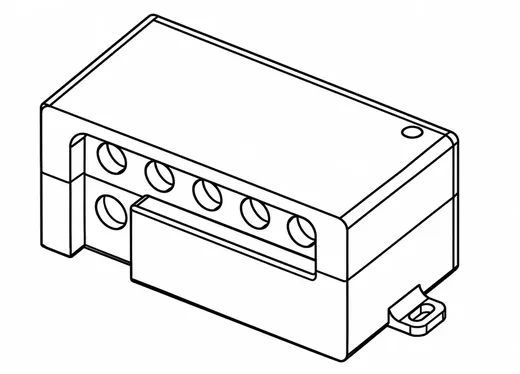
Our control boxes are designed for intermittent use and pair with our power supplies, so the whole system is sized for linear-motion duty cycles.
When you need more than 10%
If your machine really needs continuous or near-continuous motion, tell us at the start. Options include a larger motor, a stronger model running at a lower share of its rated load, or a different drive. Send us your cycle times and we will check them before you order.
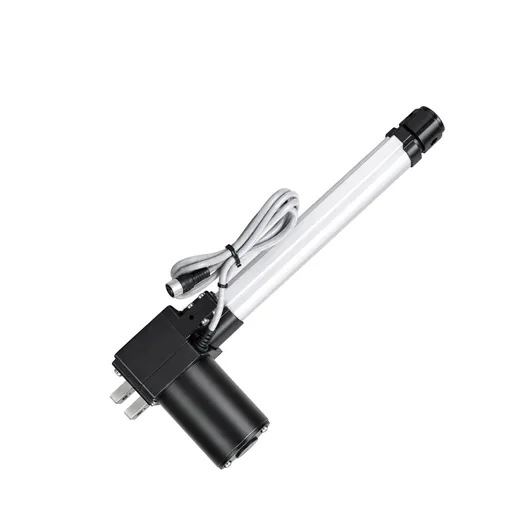
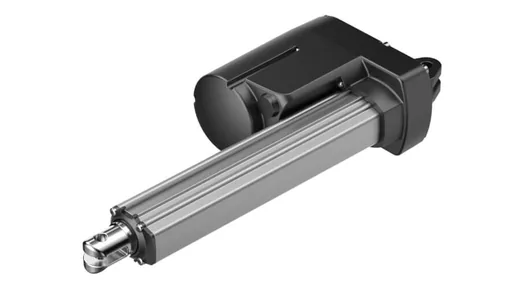
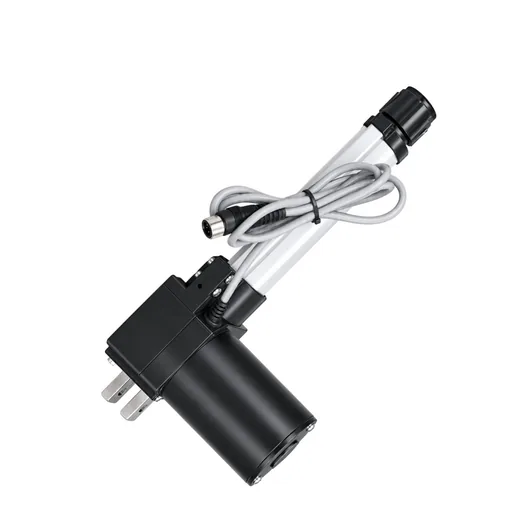
Products mentioned in this article
Made in Bengaluru. Click a product for full specifications, drawings and datasheets.
Frequently asked questions
What does a 10% duty cycle mean on a linear actuator?
It means the actuator can run for about 10% of the time, for example about 1 minute of running followed by about 9 minutes of rest.
What happens if I run an actuator beyond its duty cycle?
The motor overheats, which ages the insulation, wears gears and the drive nut faster, can trip a thermal cut-out and greatly shortens the actuator's life.
How do I calculate duty cycle?
Divide the running time by the total time (running plus rest) and multiply by 100. For example, 20 seconds of running every 5 minutes is 20 / 300 × 100 = 6.7%.
Related pages
Send us your load, stroke, speed and how often it moves. Our engineers in Bengaluru will recommend a model and send a quotation.
Send an inquiry